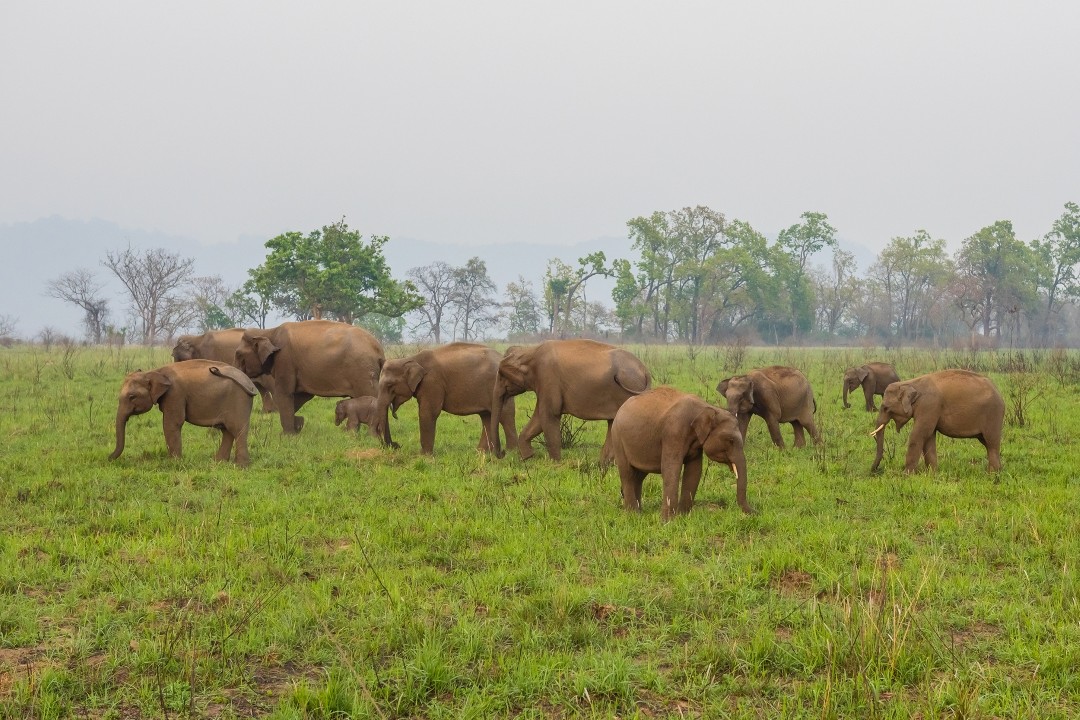
Conflict between humans and elephants (Elephas maximus) is a rising conservation challenge across South Asia. Along the Mechi River, which divides southeastern Nepal from northeastern India, rapid urban expansion and shrinking forests have disrupted the historical migration routes of elephants that travel between the two countries in search of food, resulting in ever increasing frictions.
Bishwanath Rijal (Nepal Country Coordinator) grew up in this region. He remembers when human-elephant conflict (HEC) was virtually nonexistent. Today, that reality has vanished. Successful wildlife conservation now depends entirely on the perceptions, tolerance and lived experiences of the people sharing these landscapes.
To further understand how best to tackle the human side of this issue, Rijal completed an extensive comparative study that analyzed public attitudes toward migratory elephants in India and Nepal—two neighboring countries with a contiguous wildlife corridor but distinct policy frameworks and social contexts. He evaluated community perspectives such as land rights for elephants, forest conservation, fear of elephant presence, and the acceptability of deterrent control measures.
He found key differences between communities on either side of the Mechi River.
Survey respondents living on the Indian side of the Mechi strongly supported elephants’ land-use rights and demanded strict legal action against humans involved in harming elephants. They strongly opposed lethal control for crop-raiding elephants and the general use of deterrents that could harm elephants. Furthermore, respondents in India who had suffered damage from the migratory herds were more satisfied with the compensation provided by local authorities.

In contrast, Nepali respondents were not as tolerant; their negative attitude was not based on an overall dislike of elephants, but rather the lack of a governmental compensation mechanism when elephants damaged crops or dwellings.


These findings prove that national context shapes human empathy toward wildlife. In this case, conservation governance, agricultural dependency, awareness campaigns and historical patterns of coexistence dictate how communities view elephants. As HEC escalate, integrating community sentiment into conservation planning is no longer optional. Sustainable coexistence will require balancing ecological responsibility with economic and compensation realities, public education, as well as cross‑border collaboration that respects both human welfare and wildlife survival.
